The Best Time of Year To Visit and Photograph Banff, Jasper and Beyond
Now this is a question I get asked all the time and to be honest I’m not sure if there is a right or wrong answer. There are certainly times of year that might be better or worse but if you know the right locations to head to and take advantage of the conditions you get you can walk away with some pretty incredible shots at any time of year. But is one season better than the others?

Banff Avenue in the depths of winter!
The Seasons
One thing to note when planning a photography trip to the Canadian Rockies is that the seasons don’t necessarily take place during the months you might expect them to. In the mountains of the Rockies there aren’t really 4 distinct seasons. We get a lot of snowfall over winter in this region and temperatures can plummet to below -30ºC (this is very, very cold!) for weeks at a time.
What this means is that winter tends to last close to 6 months with the first major snow fall that sticks starting at the end of October to the beginning of November and a lot of hiking trails not thawing out until June or later.
Spring brings wild flowers but heavily overlaps with summer, summer lasts around 3 to 4 months with the end part of September and start of October making way for fall colour.
So expect a long winter, a decent sized summer and for spring and fall to disappear in a flash!
Winter- Frozen Waterfalls and Fresh Snow
Winter is often the quietest time of year in the Canadian Rockies, the cold, the snow and the restricted hiking and travel puts a lot of people off. Of course the ski season runs through winter so the Town of Banff can be busier at the height of the ski season but is still much quieter than in the summer. The start and end of the winter in November andApril are great times to visit if you want a quieter winter experience, but in general just visit outside of the holiday periods during winter and you’ll be golden.
WHAT TO SHOOT IN WINTER
The start of the winter season form around mid October to mid/end November can offer some of the best photography of any time of year. At the start of the winter there is a short period of perfect conditions where there’s fresh snow on the ground and the trees, ice formations and hoar frost are present on shore fronts but lakes haven’t fully frozen.
This is my favourite time of winter to shoot and the results can just be fantastic!
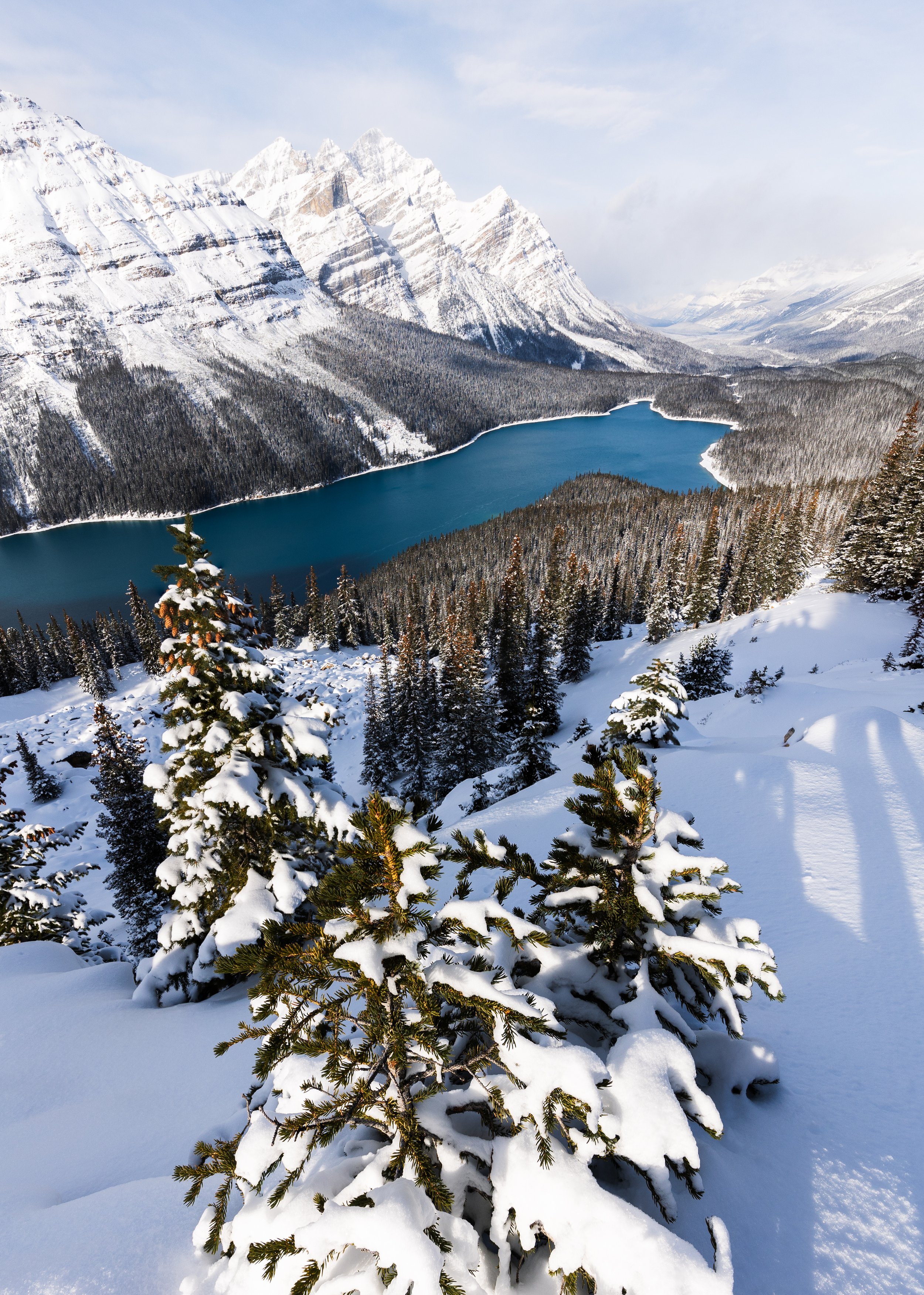
Peyto Lake
A rare moment during early winter when Peyto Lake has received a fresh dusting of snow but the deep blues of the lake still shine through.
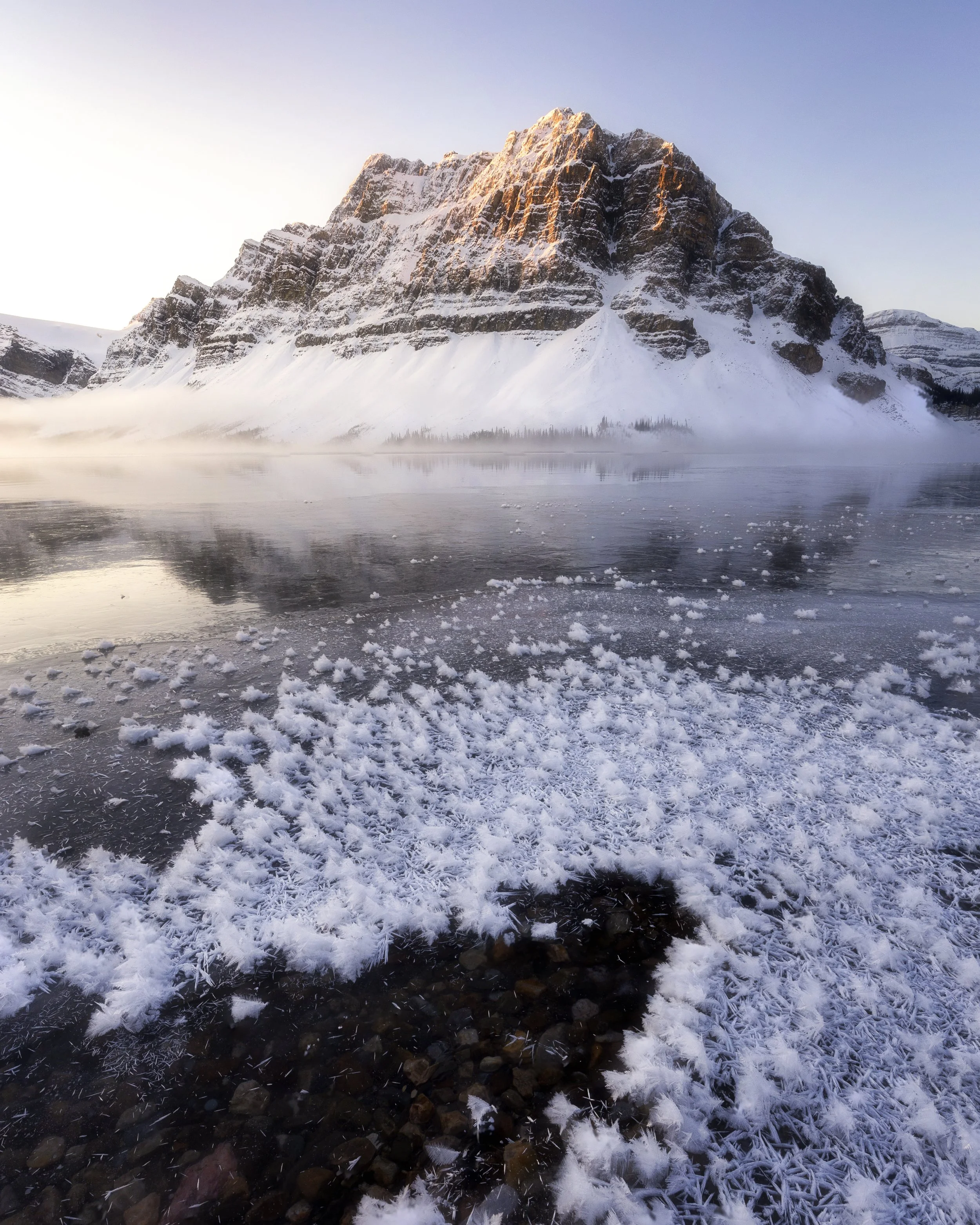
Bow Lake
Bow lake is definitely worth a visit when coming to the Rockies at the start of winter. Here you see it as the lake starts to freeze and hoar frost appears, normally a small window before this is all deep under a white blanket of snow.
SOME PLACES NEVER FREEZE!
The risk of photography in the winter months is that most lakes turn in to just one flat, white sheet offering no real definition or contrast to your images and become very difficult to photography. However there are a few spots in the Rockies that either have cabins to add to your scene, water that remains open year round or running water that doesn’t fully freeze offering the leading lines and foreground interest you’re after. You can shoot these kind of locations all winter long.
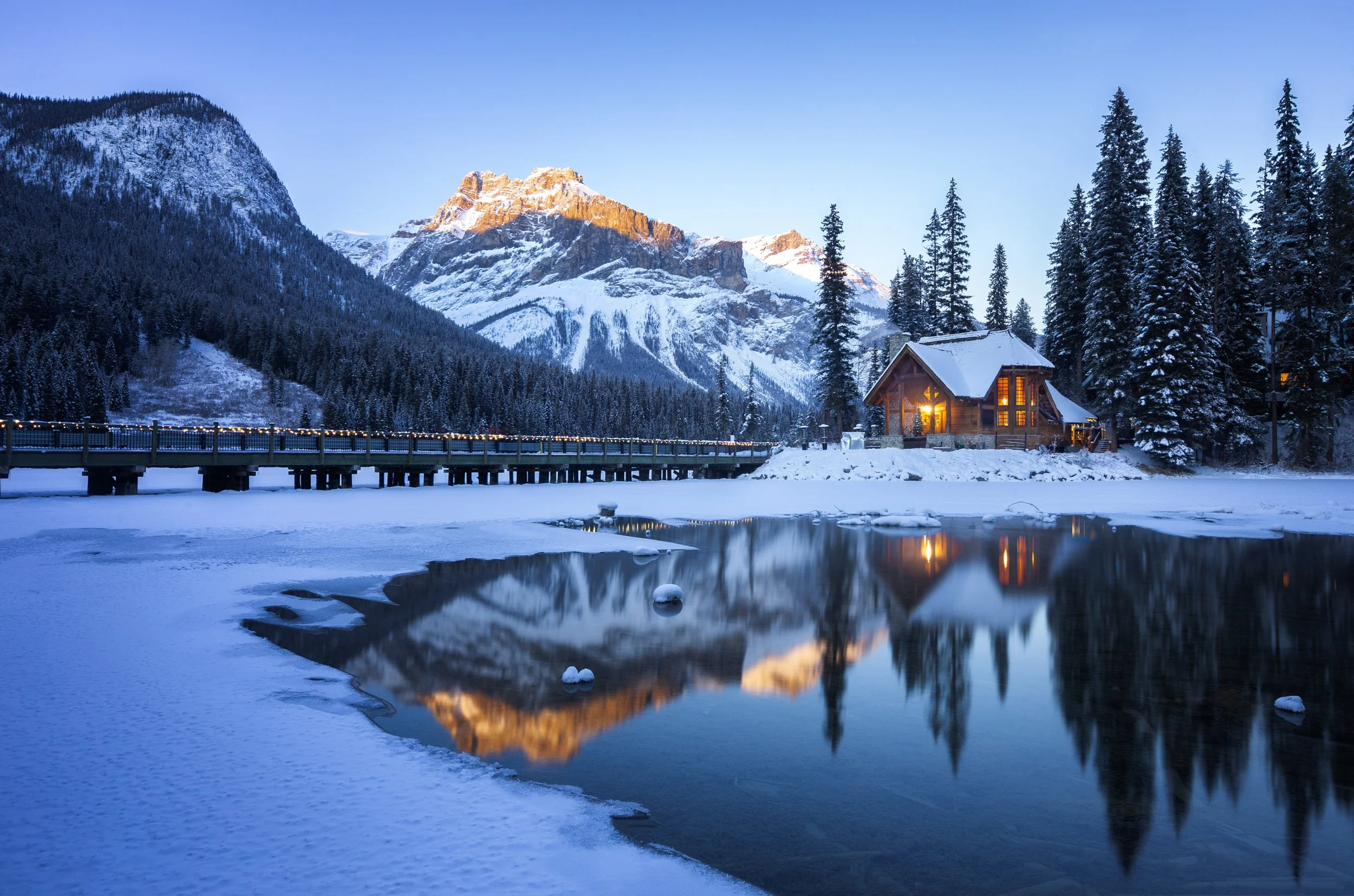
Emerald Lake in Yoho in BC hardly ever fully freezes due to warmer thermal inlets that run into the lake. You can normally get this shot even in the middle of the coldest deep freezes.
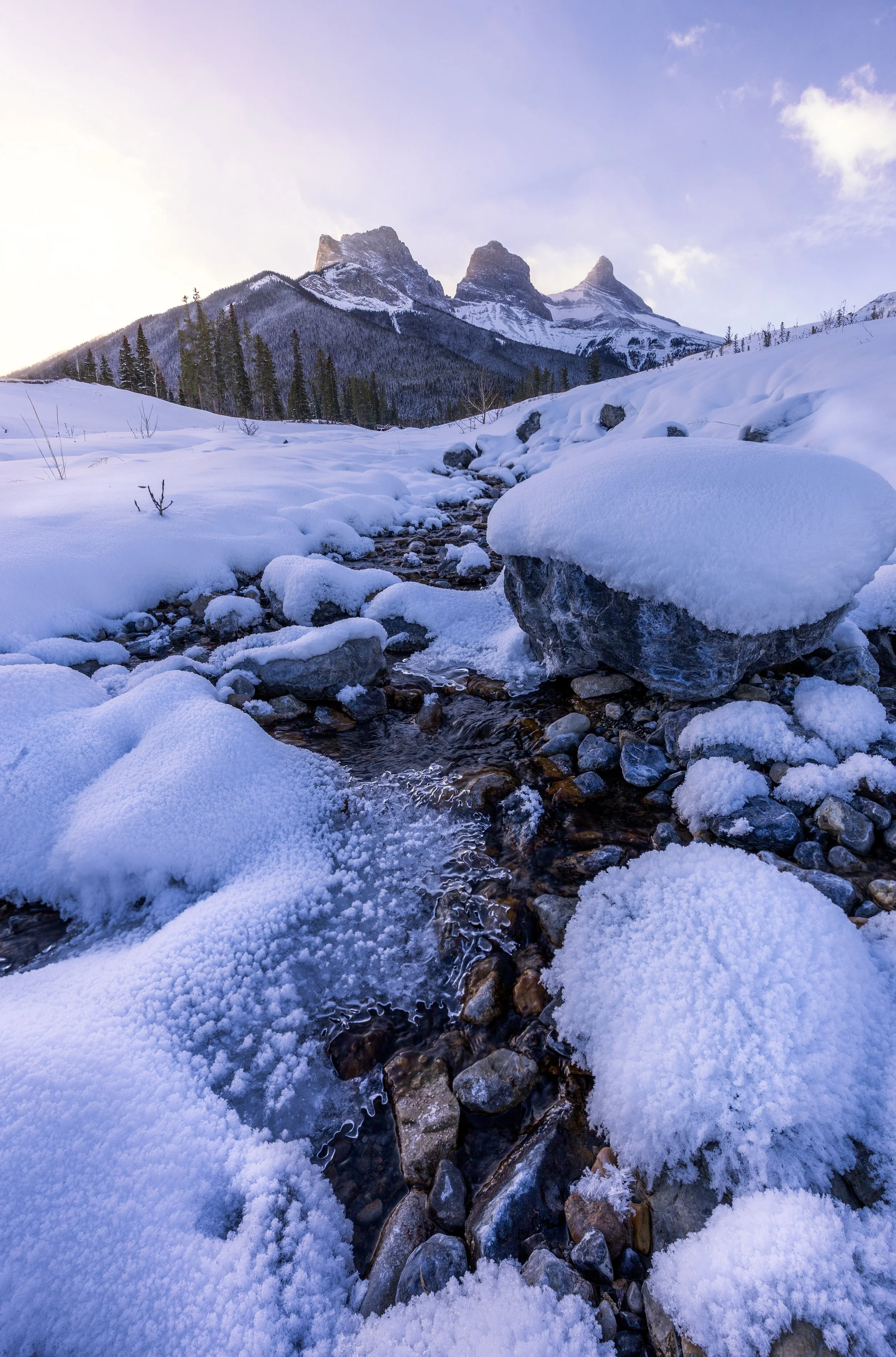
A Secret Creek Running Towards the 3 sisters in Canmore
A flowing creek offers a fantastic leading line as well as some interesting ice formations. This spot is a little harder to find so you need to be in the know. More details of this location and over 100 others including the GPS coordinates are included in my downloadable, offline photography location guide.
SOME PLACES YOU WANT TO FREEZE
During the coldest and shortest days of winter a lot of the famous lakes don’t offer the best options for photography. However there are some locations that benefit from these deep freezes and are unvisitable outside of the winter months.
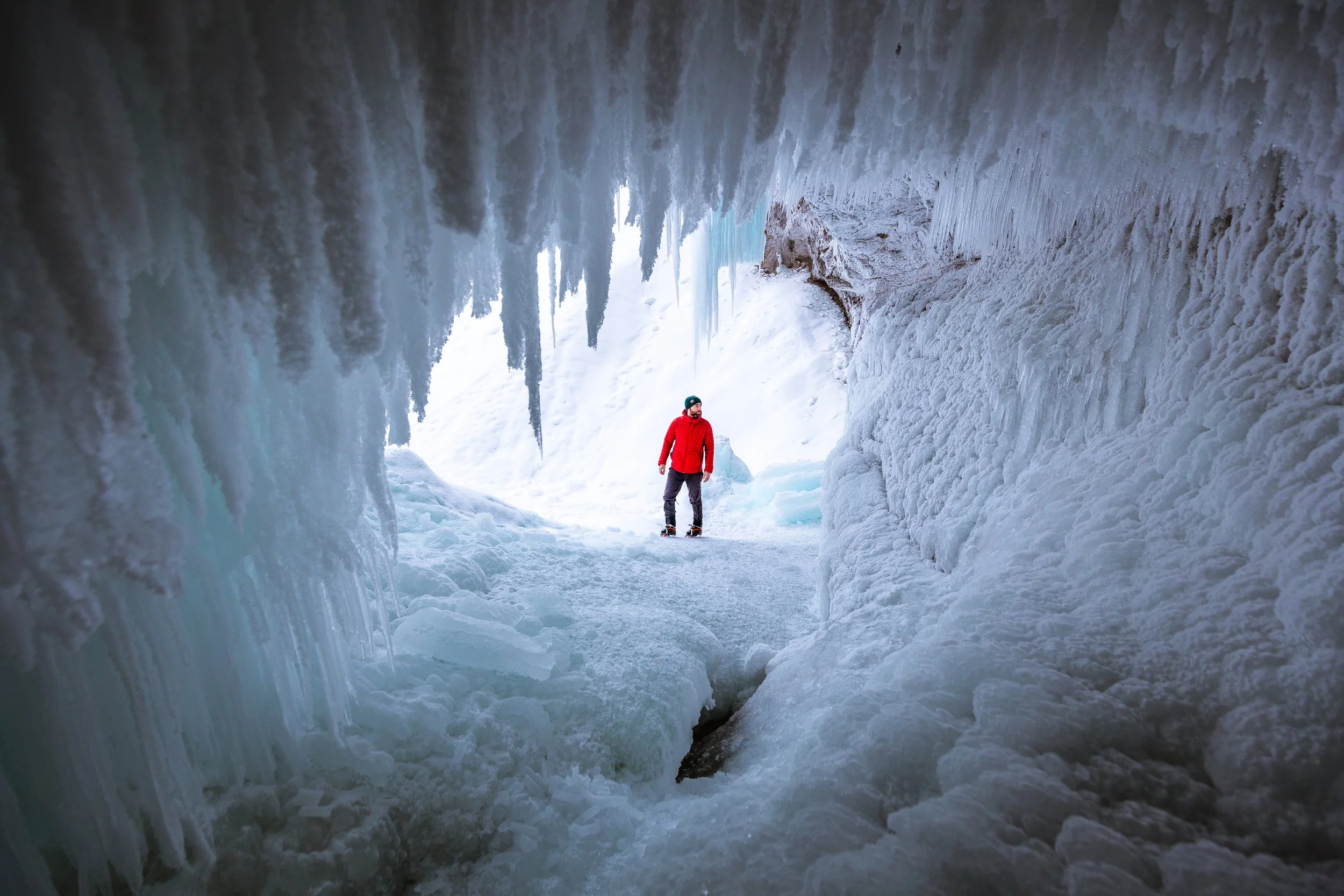
Frozen waterfalls from the right angle can look like huge ice caves!
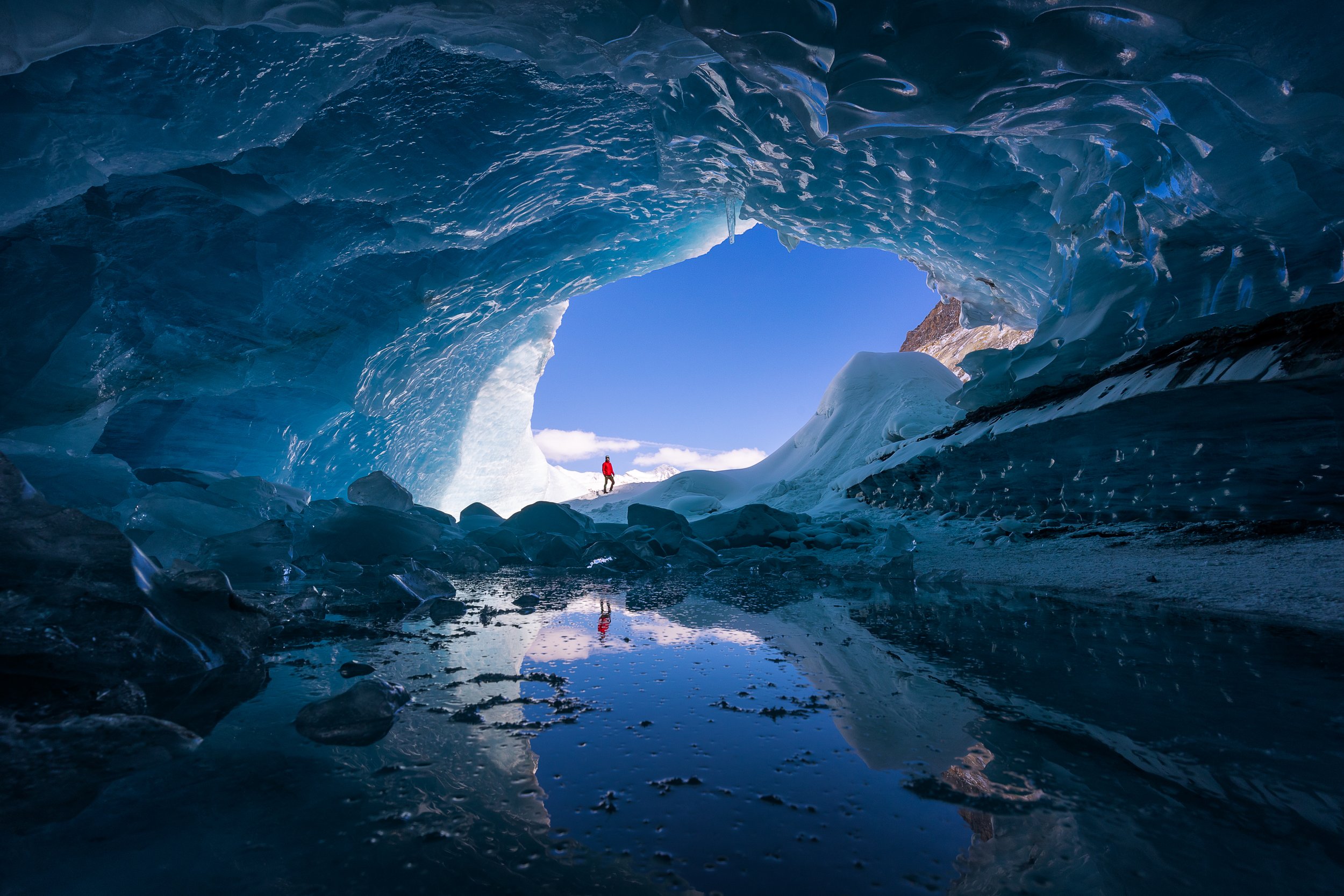
Some locations are just simply big ice caves! These locations are trickier to get to and require some glacial travel knowledge.
Spring - Hiking and Wildflowers
I’d really say the spring in the Rockies overlaps the summer, in May and June the snow begins to melt and lakes at lower elevations begin to thaw out as hiking trails open up. A universal tell tale sign of spring is when the flowers begin to bloom and here in the Canadian Rockies things are no different. The only thing is the cold weather tends to confuse the flowers and they don’t really bloom when most of us would consider the start of spring and show up a little later on. For wild flowers on hikes you’d be looking at the end of June on a good year but more likely mid July to the end of August.
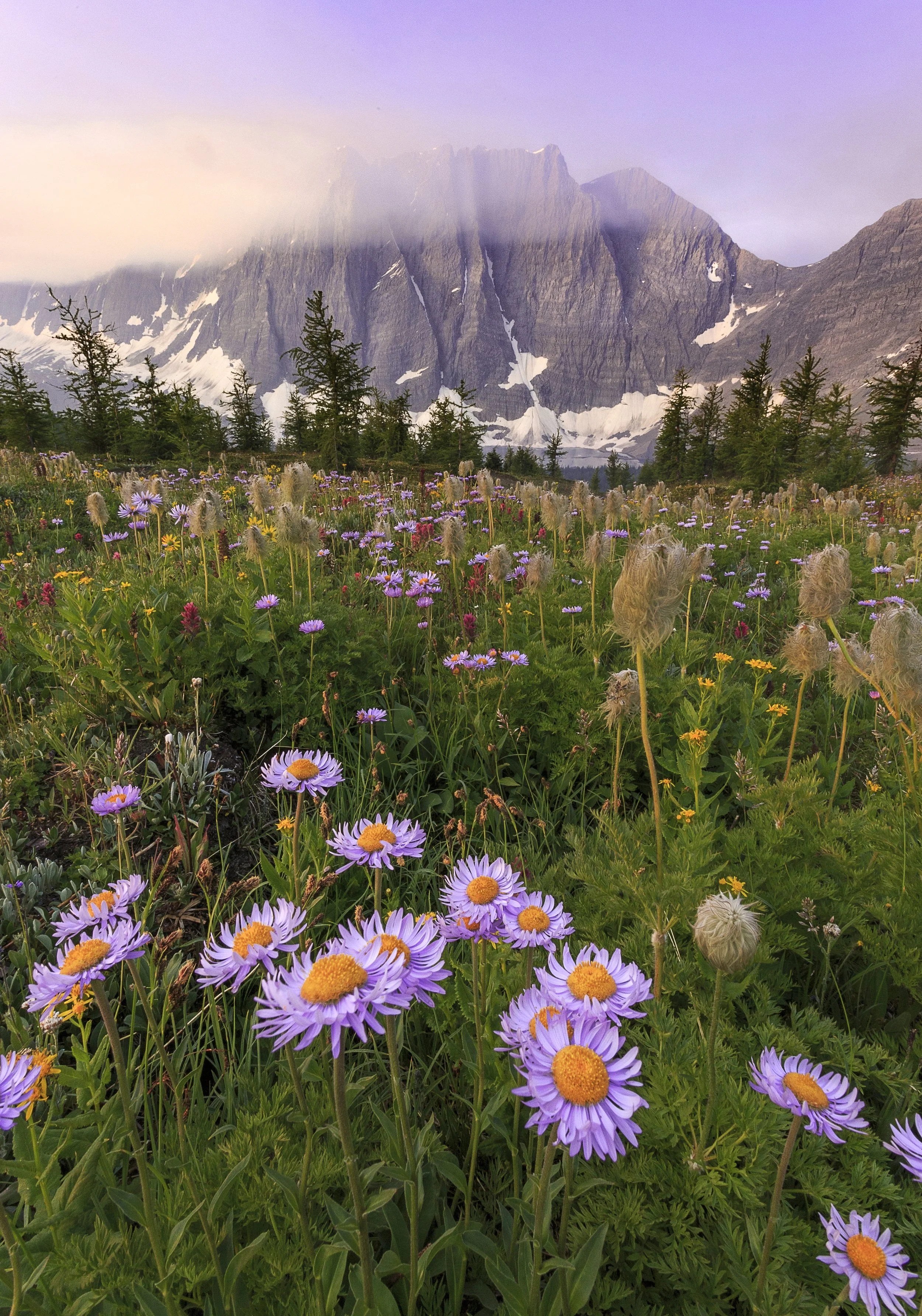
Numa Pass
There are lots of hiking trails that offer fantastic wild flower viewing. An easy option is to head to Sunshine Meadows on the gondola.
Or if you want to lace up those hiking boots sections of the Rockwall trail offer an abundance of wildflowers that scatter the landscape.
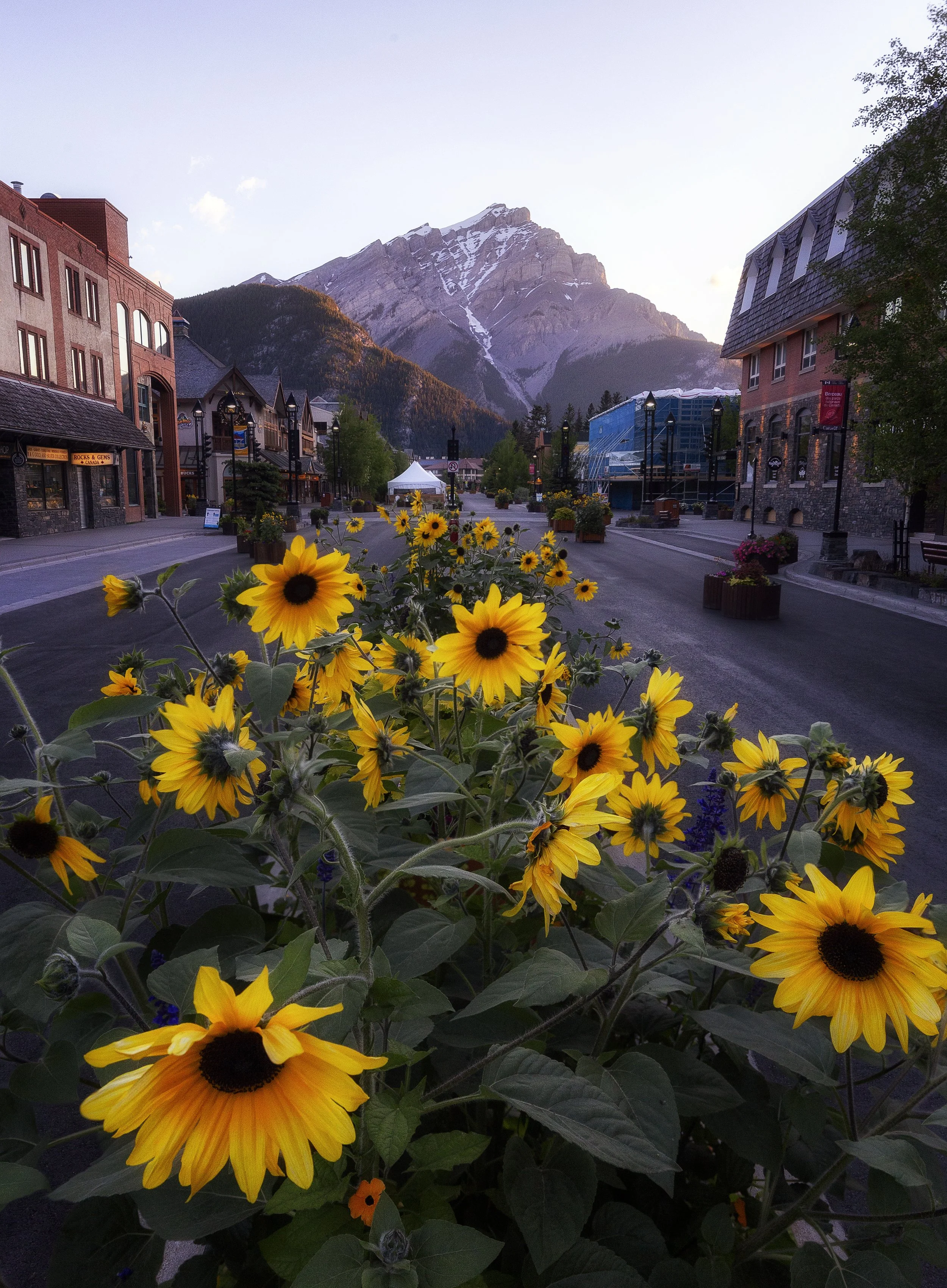
The Town of Banff
During spring the weather warms up a little you’ll even find beautiful blooms of flowers up and down the main street of Banff Avenue. These allow for some wonderful compositions with Cascade mountain in the background.
Summer - Mountain tops, Astro and Iconic Lakes
Summer is the time of year I’m most excited about! Not necessarily because of the photography conditions (sometimes other times of year present more unique possibilities) but because of the accessibility. It’s easier to stay up late, keep warm and cover a lot of ground. So during the summer months it’s about taking advantage of the astro season as the milky way lines up over iconic peaks, wasting away summer evenings watching the sunset over those famous lakes and exploring further by hiking to the top of a mountain to see the sun come up!
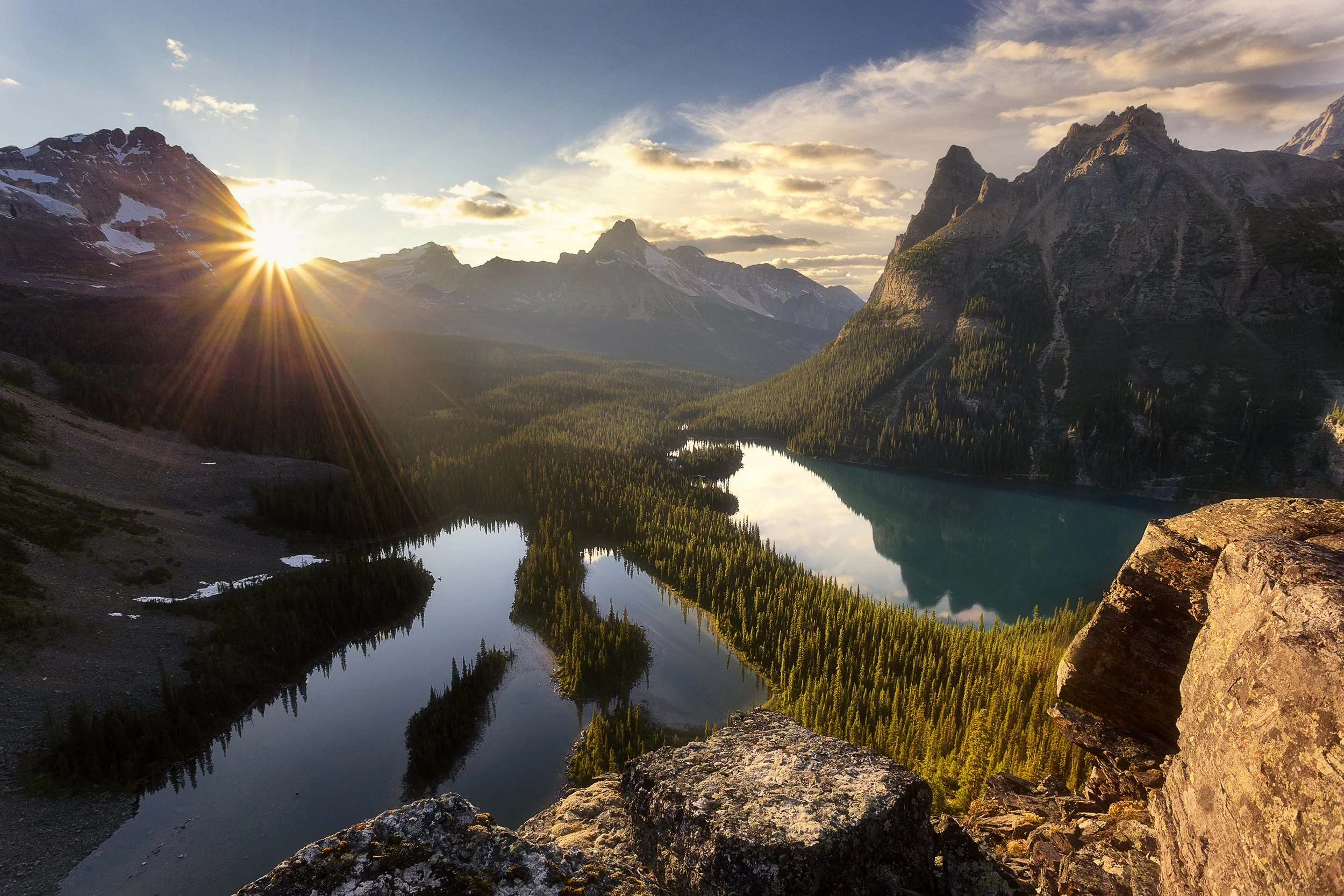
Watching the sunset from atop the Opabin Plateau at Lake O’Hara
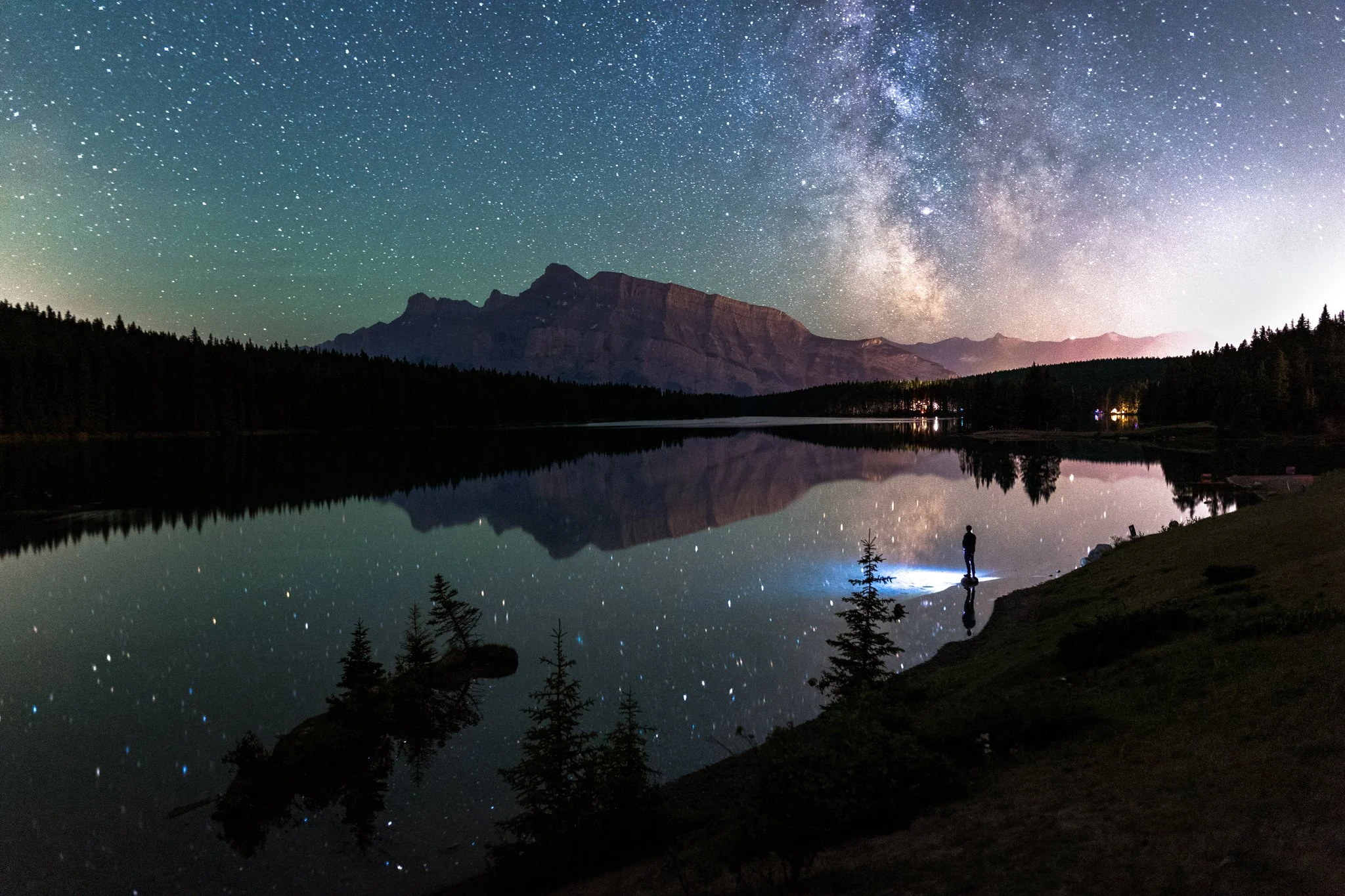
Making the most of those warmer nights and the milky way alignment
Fall Photography - Larch Trees and Colour
Now Fall, or Autumn as I like to call it being British, probably has the reputation for being the best time of year to shoot in the Rockies and it is certainly up there and not just for the reasons you might think. Of course at this time of year the larch trees and aspens are turning yellow and the forest foliage is becoming vibrant shades of red and orange but the temperatures has also dropped!
During the summer hiking can be a challenge due to wild fire smoke and blistering temperatures both of which are unfortunately becoming more and more common. In fall the temperatures drop a little meaning the smoke tends to clear, the risk of wild fires is reduced and hiking becomes easier! The fall season or larch season only really lasts a few weeks here with the trees getting to peak colour only a week or two before they’ll drop their needles and the first cold snaps roll in. If you’re very lucky you may well be met with the golden goose of conditions which is fresh snow and larch trees!
If changes a little each year but I’d say around the last week of September to mid October is a great time of year to aim for. During this period I’ll try and cram in as much hiking as possible and the fall photography is just an added bonus!
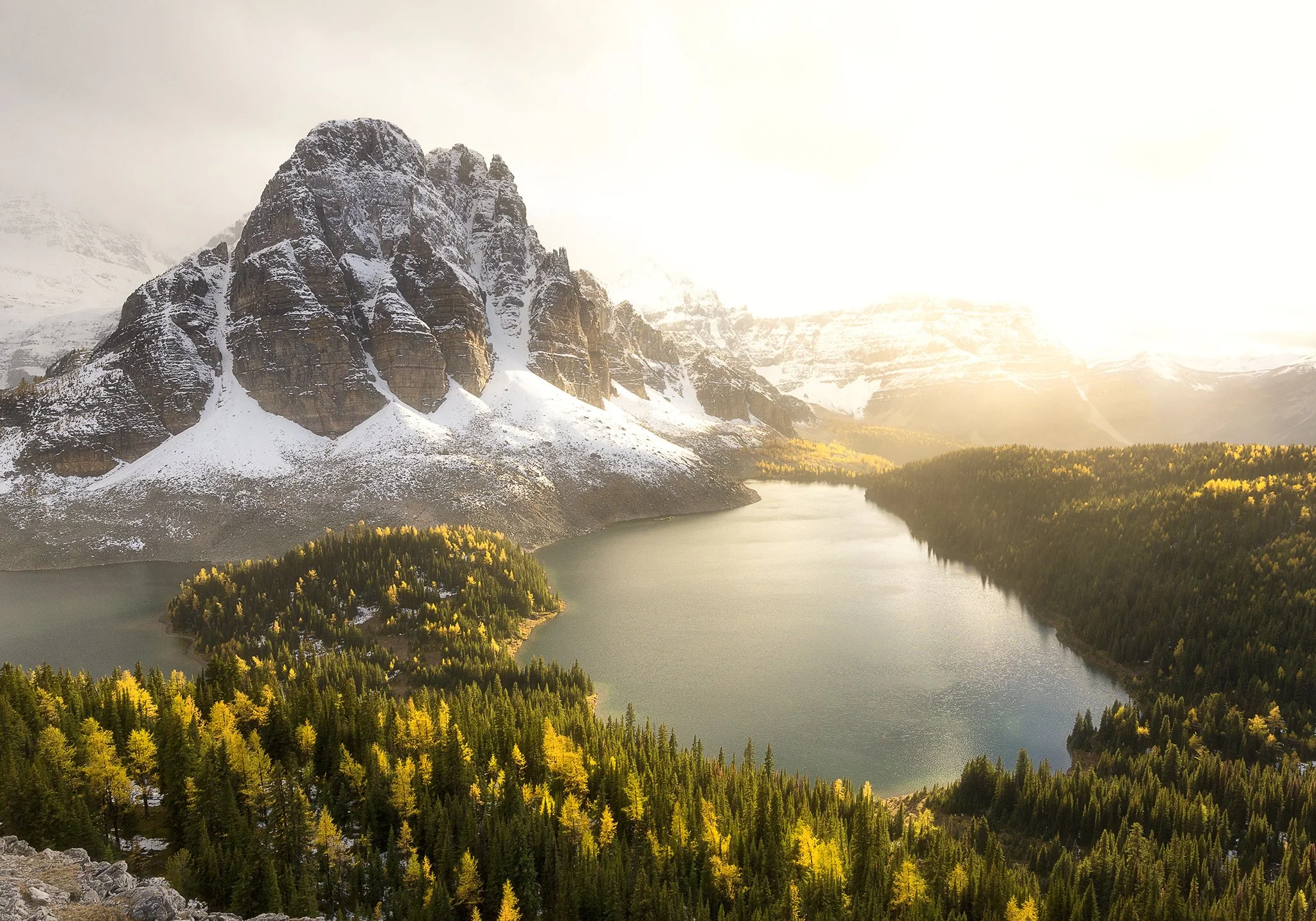
Mount Assiniboine with fresh snow and plenty of larch trees, a lucky combination!
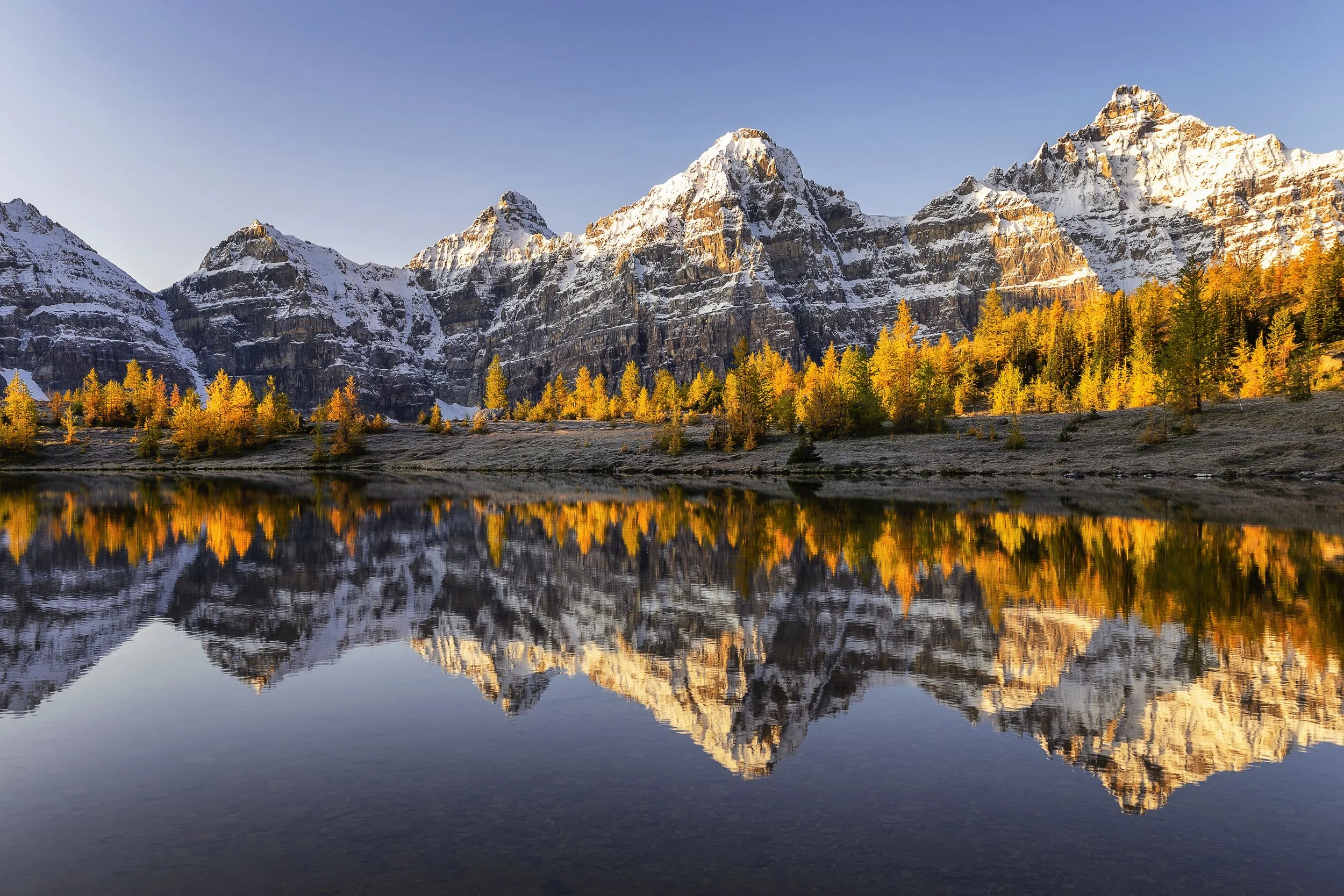
Larch trees reflect in the lake with no name up on the Larch Valley Hike
So which season should I pick?
As I mentioned before there isn’t really a bad time of year to visit the Rockies but you will need to plan your trip accordingly.
In winter there is of course a chance you’ll end up with grey skies for days on end or heavy snowfall which in some ways can limit your creative possibilities but increase them in others. I’d be looking for frozen waterfalls and small areas of open water as well as shooting with a long lens to get those mountain peaks. If you get the right conditions you can end up with some unique shots.
In spring it’s all about wild flowers and getting out and hiking as much as you can to make the most of them! Certain lakes at lower elevation will also be great to shoot and the weather will be getting warmer.
In summer the world is your oyster if you’re willing to put in the effort. This is when those iconic lakes have thawed and offer turquoise blue waters or perfect reflections. Photography is logistically easier because you won’t be battling snow and cold weather, these lakes will be much busier at this time of year, sometimes hoards of photographers line the lake fronts in certain areas. However most tourists don’t stray more than a km from their car so if you take a walk you’ll find some great photography all to yourself.
In Autumn or Fall, the hiking conditions are fantastic and you’ll either get open lakes, golden larches or maybe even some fresh snow depending on when you time your visit.
If you are coming to visit the Canadian Rockies and have found the videos and writes ups useful in planning your trip I highly recommend downloading one of my offline Photography Location Guides for the Canadian Rockies. They include what to bring and how to get to locations along with exact GPS coordinates to over 100 world class compositions and are a great way to support what I do.